Sourtrack

Designing the operational backbone of a growing company

Role Product Designer
Team 4 designers
Scope Research, UX Strategy, Product Definition, UI System, Brand

Sourtrack was the operational system designed to structure and standardize the management of new projects and services at CEC, a mining-specialized logistics company operating across multiple countries in Latin America.

The project consisted of replacing an obsolete and poorly adopted internal tool with a new platform capable of:

  • Connecting the commercial layer
  • Integrating with the operational tracking system (connected to Mojito360)
  • Standardizing processes during a critical growth phase
Context

A company growing faster than its systems.

CEC was experiencing significant growth. New projects were increasing in volume and complexity, but internal processes were not structured to scale.

The existing system was difficult to maintain, hard to use for operational teams and misaligned with real business workflows.
As a result, teams across different Latin American countries gradually abandoned the system. Projects worth hundreds of thousands of euros were managed through disconnected tools, email threads, and spreadsheets.

There was no unified traceability, no process standardization and no single source of truth.

In a mining context — where documentation control, asset traceability, and financial oversight are critical — this represented a significant operational risk.

The Challenge

Not just a new interface — a new operational system.

The goal was not simply to design a new interface. The challenge was to define a system that would be:

Desirable and easy to use for different roles and user profiles

Structured enough to enforce process clarity

Robust enough to support financial control

Simple enough to drive adoption

Deliverable within three months

The success of Sourtrack would determine something bigger: if the system proved effective, it would open the door to further custom developments for CEC, including proprietary CRM and BI solutions, consolidating a tailored software suite defined and built by the Mojito team.

My Role

Product Designer for operations and administration.

I worked as Product Designer for the system, focusing on operations and administrative teams. I was responsible for:

  • Defining the system architecture
  • Designing user flows
  • Mapping user roles and profiles
  • Defining the design system
  • Coordinating closely with the frontend team
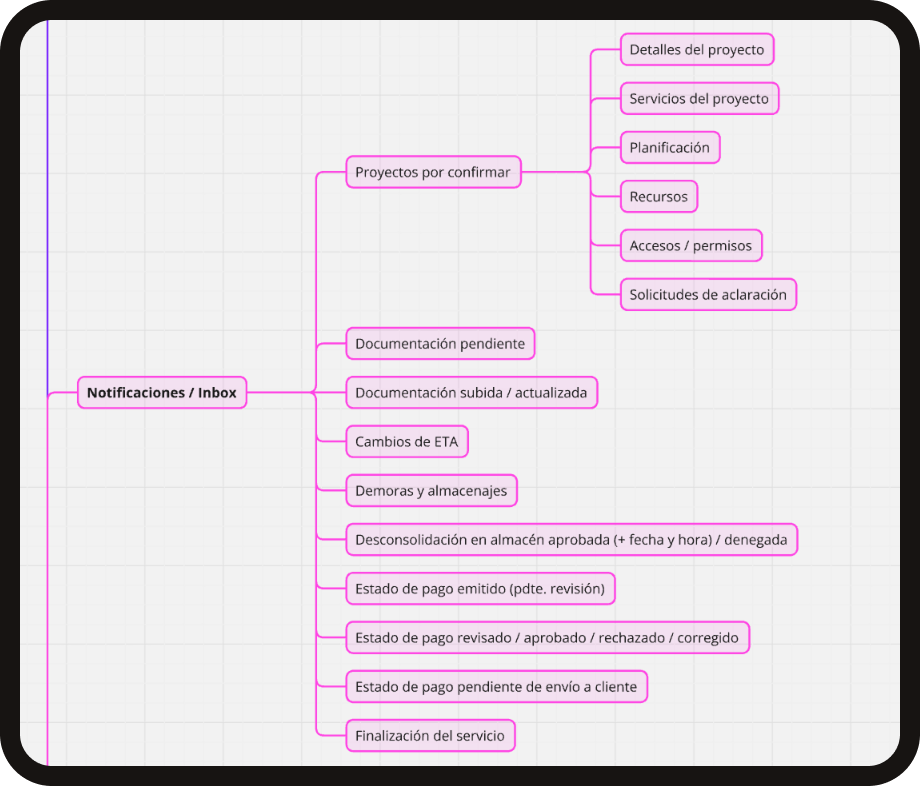
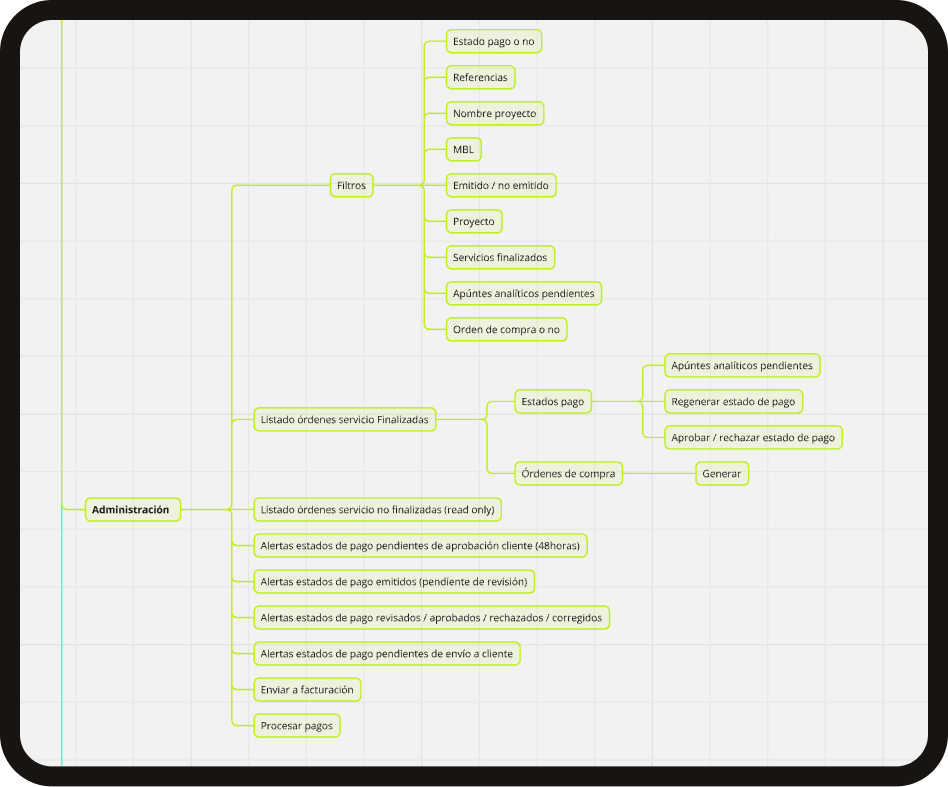
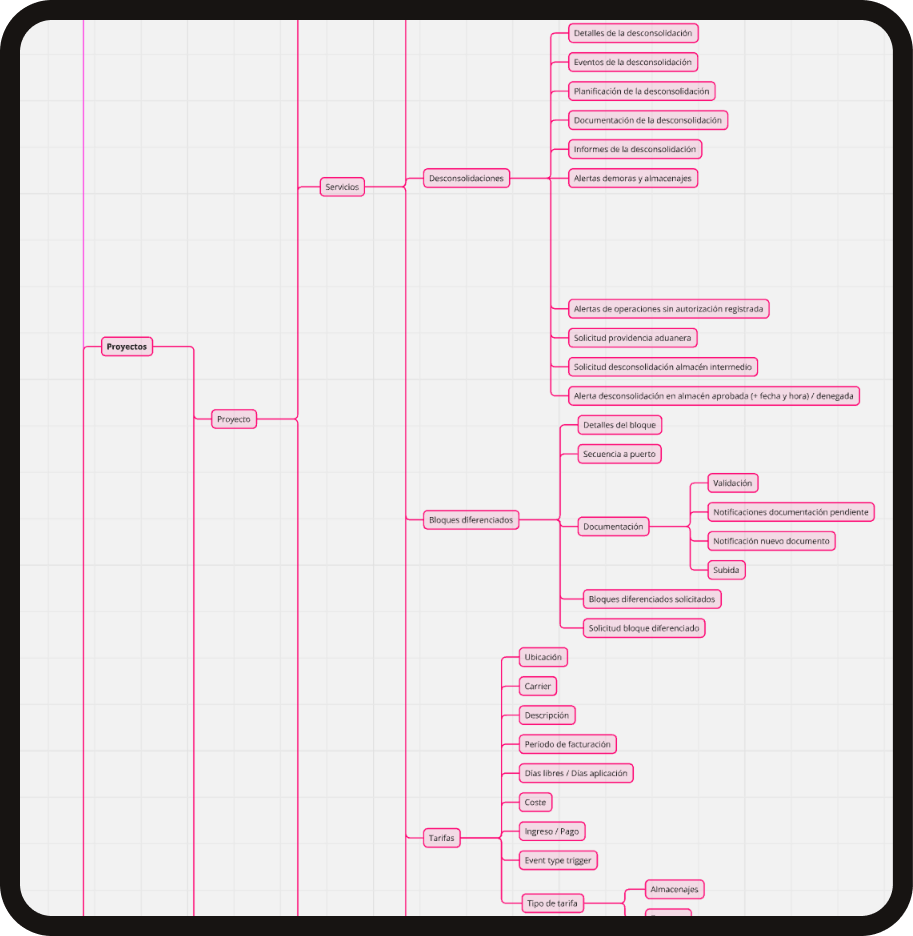
Sourtrack System Architecture - Initial Layer Sourtrack System Architecture - Middle Layer Sourtrack System Architecture - Final Layer

The project did not prioritize branding or visual identity. The objective was operational efficiency and structural clarity.

Product Strategy

An intermediate system connecting three critical layers.

Sourtrack was conceived as an intermediate system connecting three critical layers:

The commercial layer (Odoo)

The operational tracking layer (Mojito360)

The administrative and financial layer

Solution

Structuring operations from project to unit level.

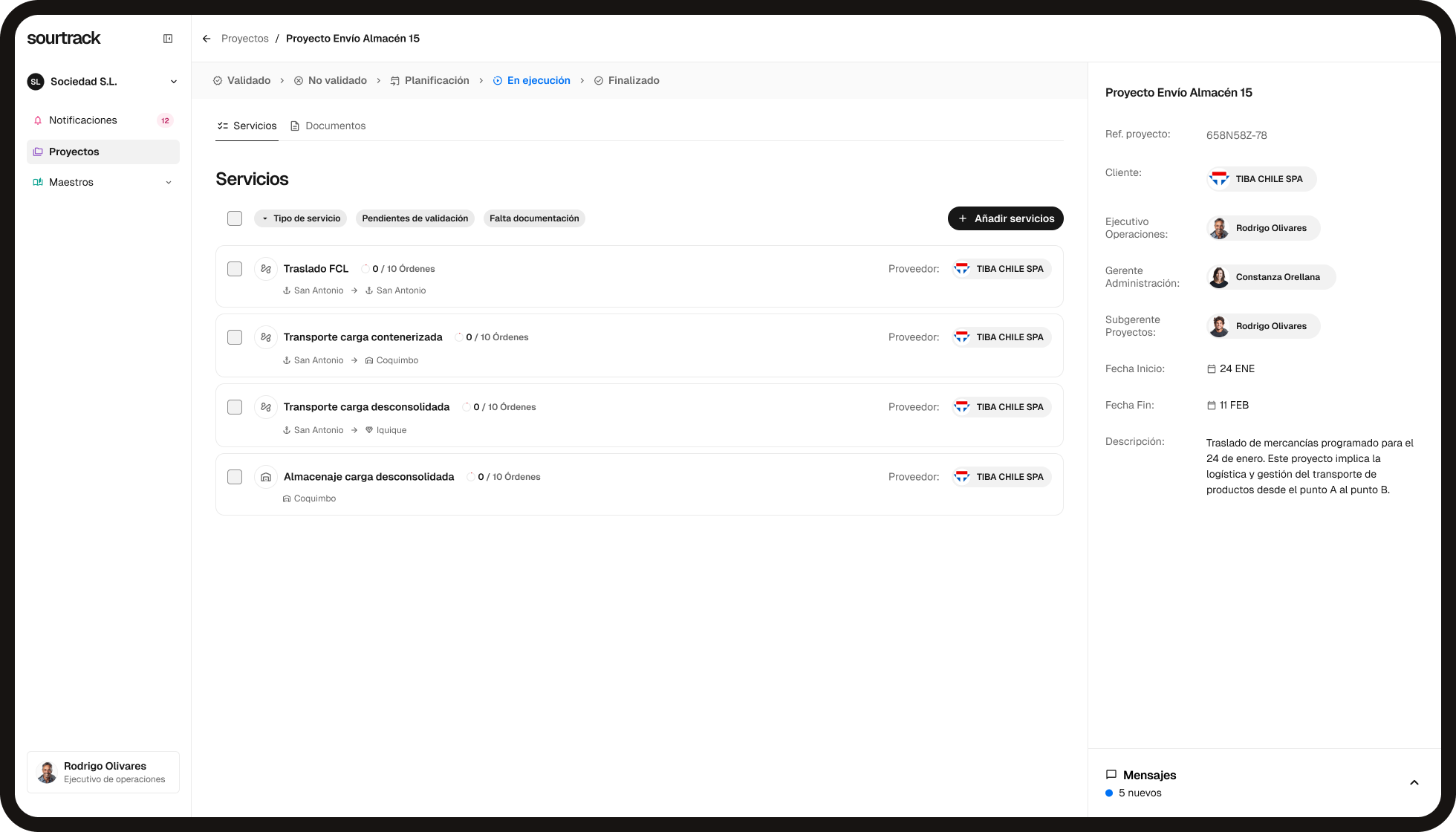
1. Project Management Module

The core of the platform for operations teams.

A Project was composed of one or multiple Services. Each Service was composed of Units.

For example: A project could include a transportation service for 200 batteries and a warehousing service for those same 200 batteries. Each individual battery represented a service unit, enabling granular traceability and visibility.

Within each service, users could manage:

  • Associated documentation
  • Related resources (operators, vehicles, equipment)
  • Administrative and financial criteria

This ensured both operational control and financial structure within the same framework.

Sourtrack Project & Service Management Dashboard Mockup

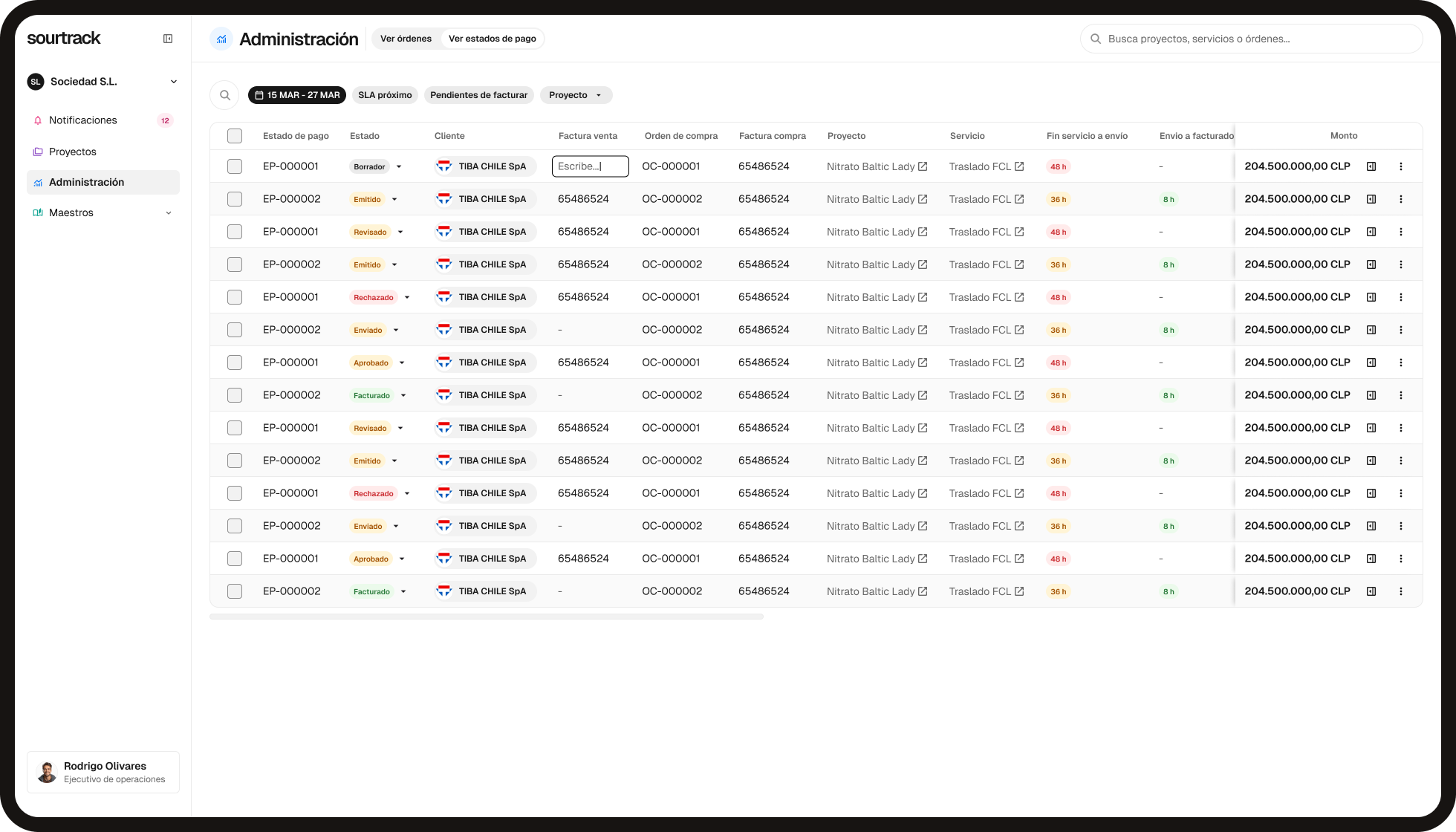
2. Administrative Operations Module

Designed specifically for the administration department.

This module allowed teams to:

  • Register operational costs and expenses
  • Link costs to specific projects and services
  • Maintain structured financial control

The goal was to eliminate fragmentation between operations and finance.

Sourtrack Administrative Operations Module Mockup

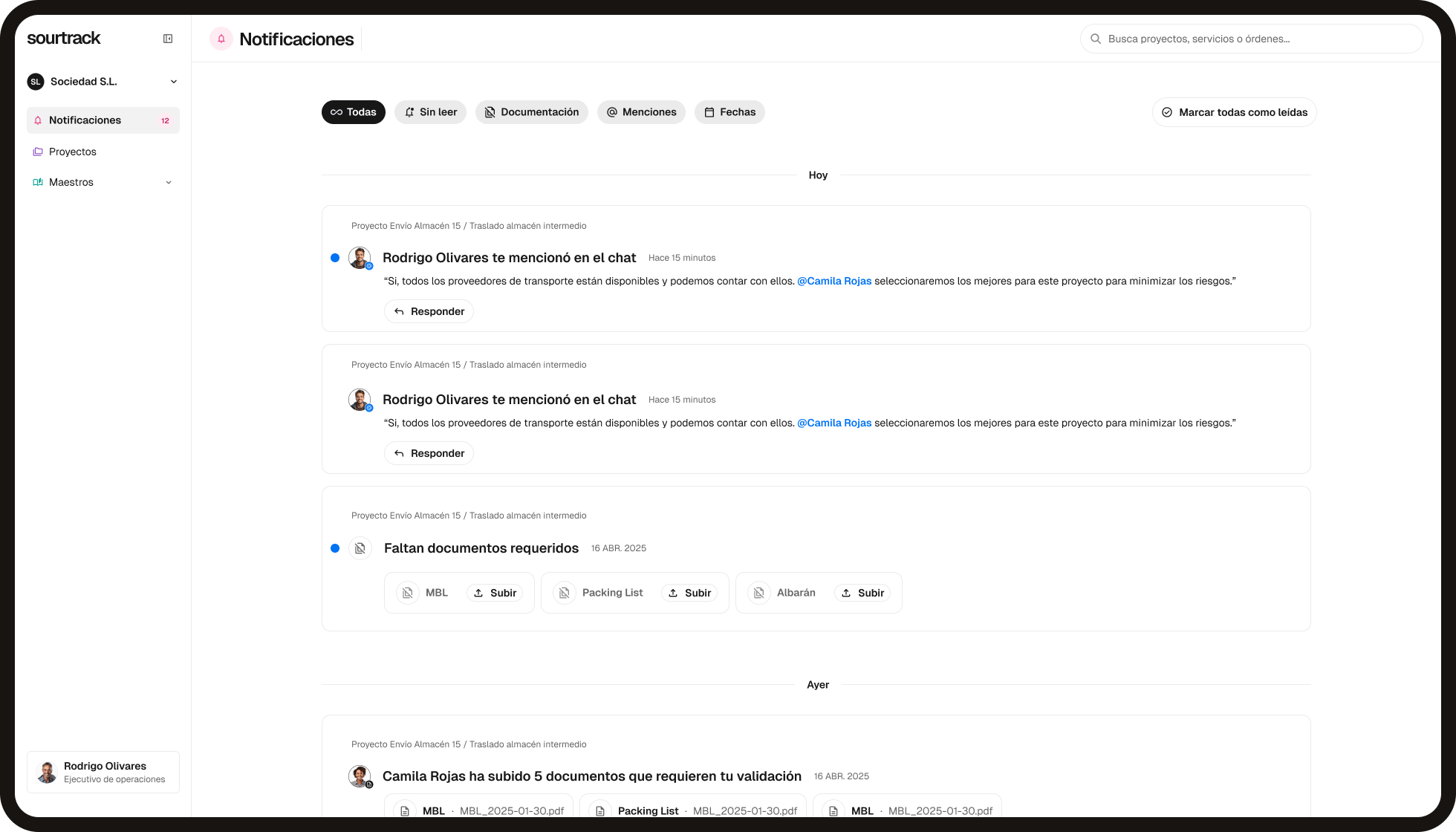
3. Notification System

A transversal notification module designed to ensure operational awareness.

It allowed users to:

  • Detect documentation errors
  • Identify pending validations
  • Monitor changes in critical operational information

In a multi-country environment with multiple stakeholders, structured visibility of incidents was essential.

Sourtrack Notification System Interface Mockup

4. Master Data Management Module

A foundational module for structural consistency and scalability.

It provided centralized management of:

  • Contact types
  • User types
  • Service types
  • Transport types
  • Goods categories
  • Equipment and resource types
  • Currencies and exchange rates
  • Document types

Without strict master data governance, scalability would not have been possible.

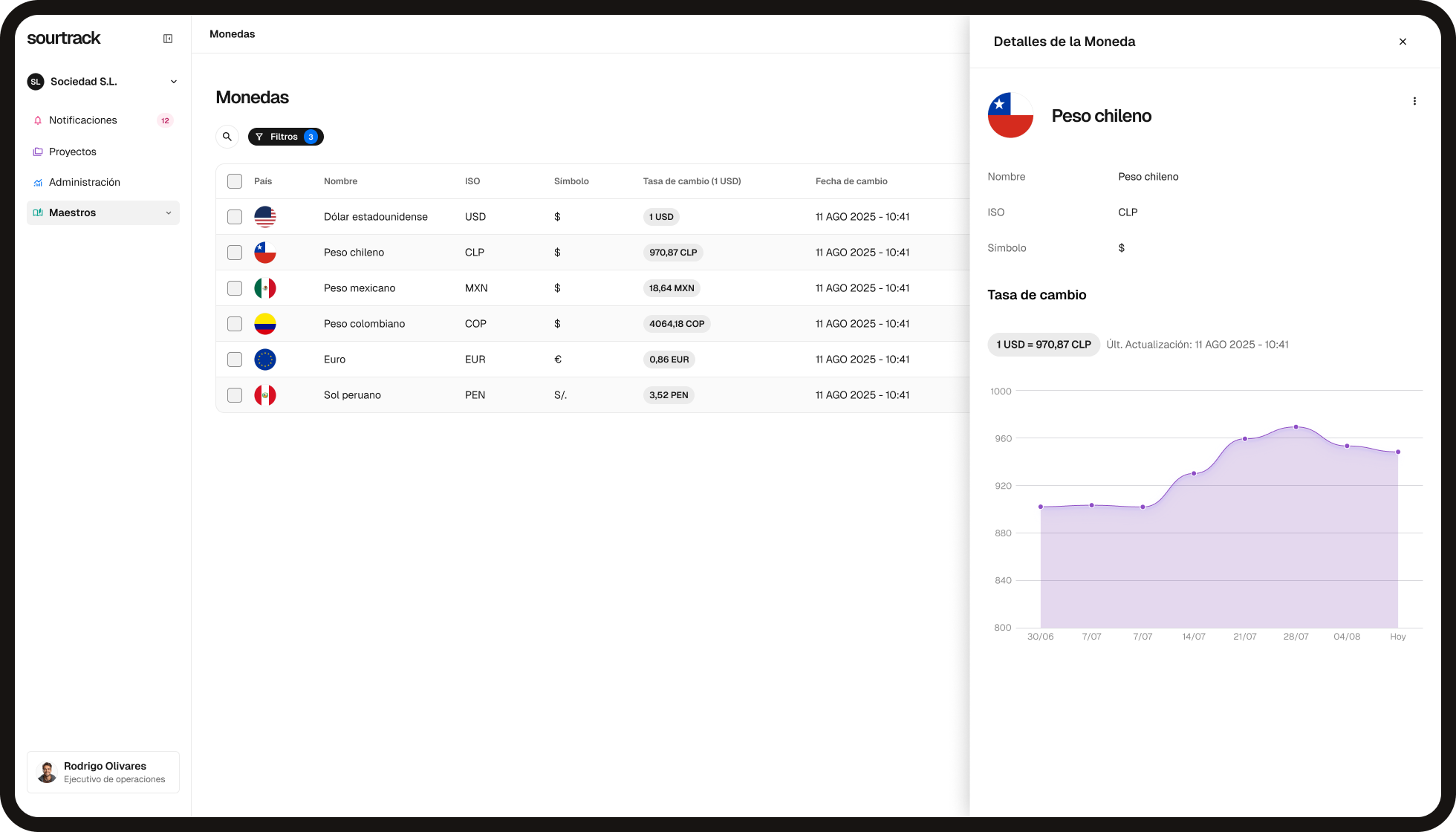
Sourtrack Master Data Management - Currencies Mockup
Design System & Implementation

Built on neutrality and performance principles.

Given the tight timeline and the need for close collaboration with frontend, a design system approach was essential.

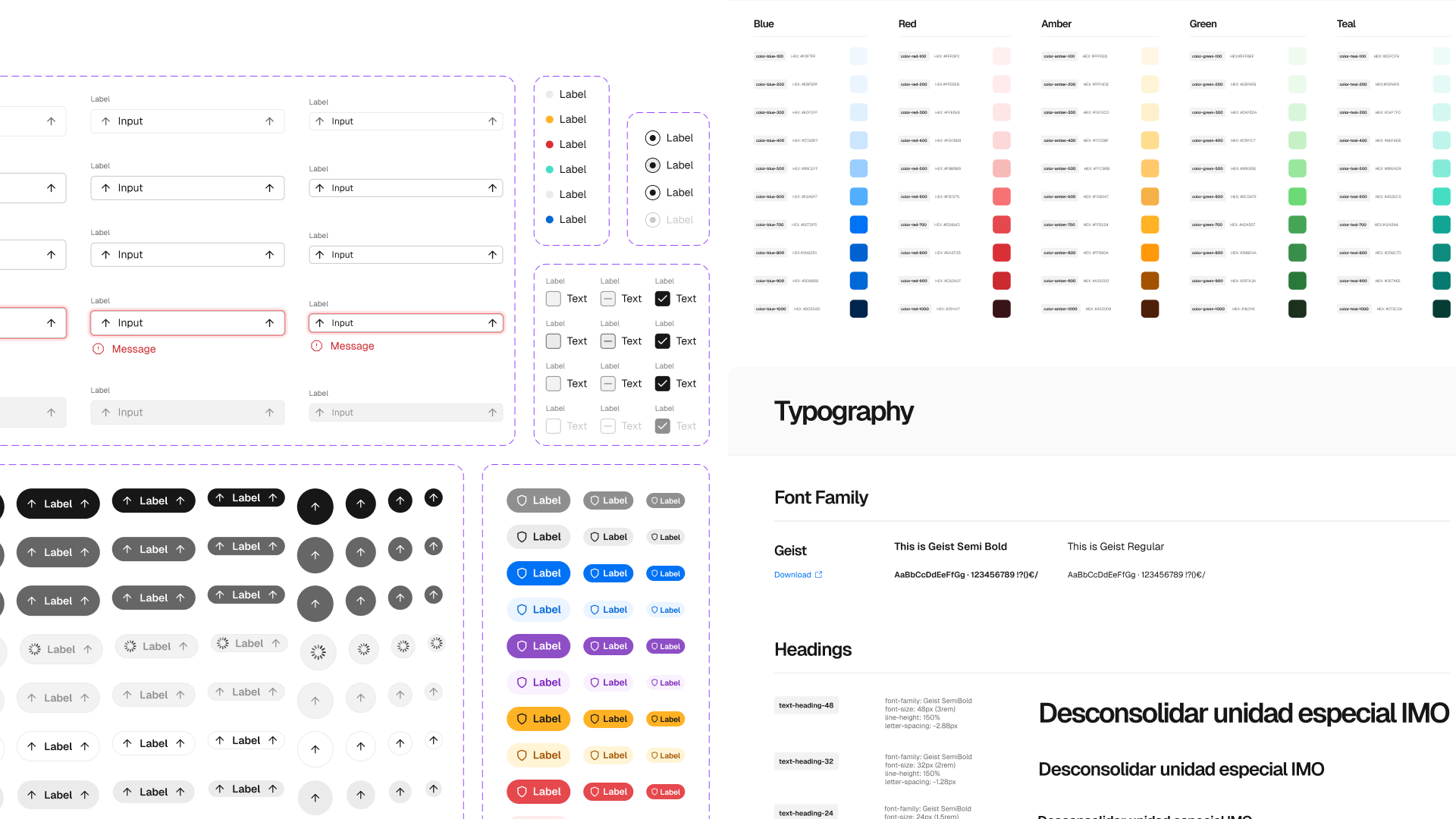
I based the UI system on the neutrality and performance principles of Vercel's Geist design system.

The decision was driven by:

  • Visual neutrality
  • Suitability for complex information systems
  • Structural consistency
  • Implementation efficiency

Brand expression was not a priority. The system was designed as a pure operational tool.

Sourtrack Design System Foundations and Components Overview

What's Important for Me

Adoption as success criteria

A system is only successful if teams actually use it. Designing for real operational contexts — not ideal scenarios — is critical.

Time pressure and a reduced team

Sourtrack was not about aesthetics or innovation for its own sake. It was about building a reliable operational backbone under time pressure, enabling a company in expansion to scale with control and confidence.