Mojito360

Designing clarity and control in complex supply chain operations.

Helping logistics teams move from reactive, fragmented workflows to proactive and controlled operations.

Role Lead Product Designer & Frontend Lead
For who Supply chain managers & Companies Logistics Teams
When 2020 - Now

Mojito360 is a B2B logistics platform used by Supply chain managers and Companies Logistics Teams to manage multimodal supply chain operations.

More than just tracking, storing documents, or generating reports โ€” it's a hub that integrates systems and stakeholders to transform how shippers manage their logistics.

I worked as Product Designer and Frontend Lead translating complex logistics workflows and user needs into intuitive experiences, ensuring scalable implementation across enterprise clients.

The Challenge

Structural complexity without operational clarity.

For companies managing import and export operations, global supply chains are highly complex and unstable environments.

Operations vary significantly depending on industry verticals, shipment types, and regulatory requirements Most companies manage multimodal transport flows (sea, air, road, rail), each with different constraints, timelines, and documentation standards.

Despite having the data, logistics teams operate through fragmented systems that reduce visibility, rely on emails and spreadsheets for coordination, and create a constant state of reactive firefighting.

This complexity is amplified by global volatility, delays, and operational disruptions. Small misalignments frequently result in:
Cost overruns

Reprocessing of documentation

Demurrage and detention fees

Customer dissatisfaction

The problem was not a lack of information โ€” it was the absence of centralized clarity and control.

Solution Overview

Shaping the product experience and technical implementation.

As Product Designer, I was responsible for defining the UX direction of Mojito360, translating business priorities into structured, scalable product experiences.

My role focused on turning board-level priorities into structured operational models and workflows, reducing friction in collaboration and shipment progression, and overseeing frontend implementation and ensure consistency.

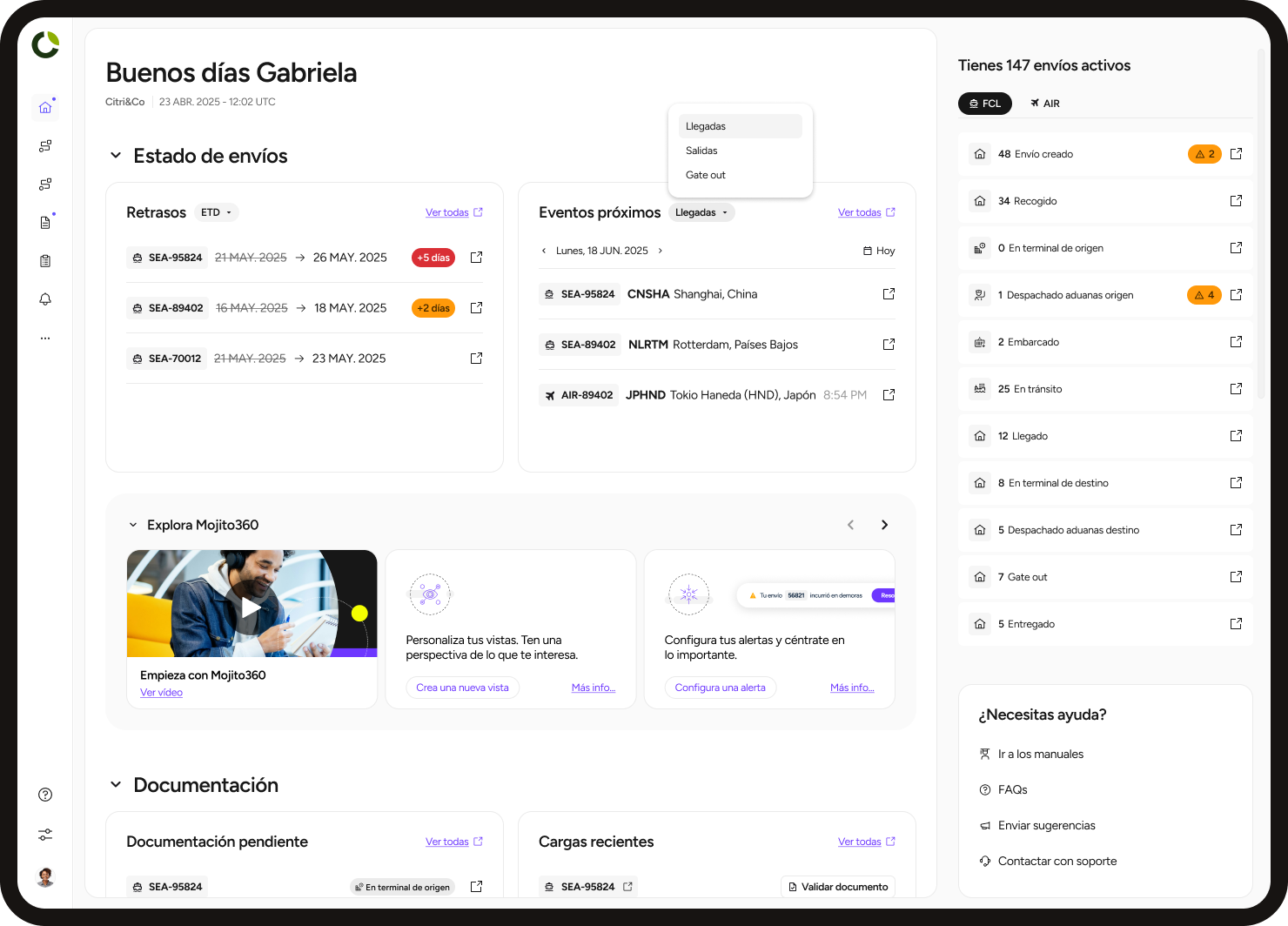
1. Home โ€” Operational Control Center

The Home answers one essential question: โ€œWhat requires my attention today?โ€

It operates as a synthesis layer, consolidating critical shipment signals into a single, decision-oriented view. Beyond visibility, it also drives value activation by surfacing key features and workflows.

Designed for transversal import/export needs, personalization is planned to further adapt priorities by company type and operational context.

Mojito360 Home Dashboard โ€” Operational Control Center

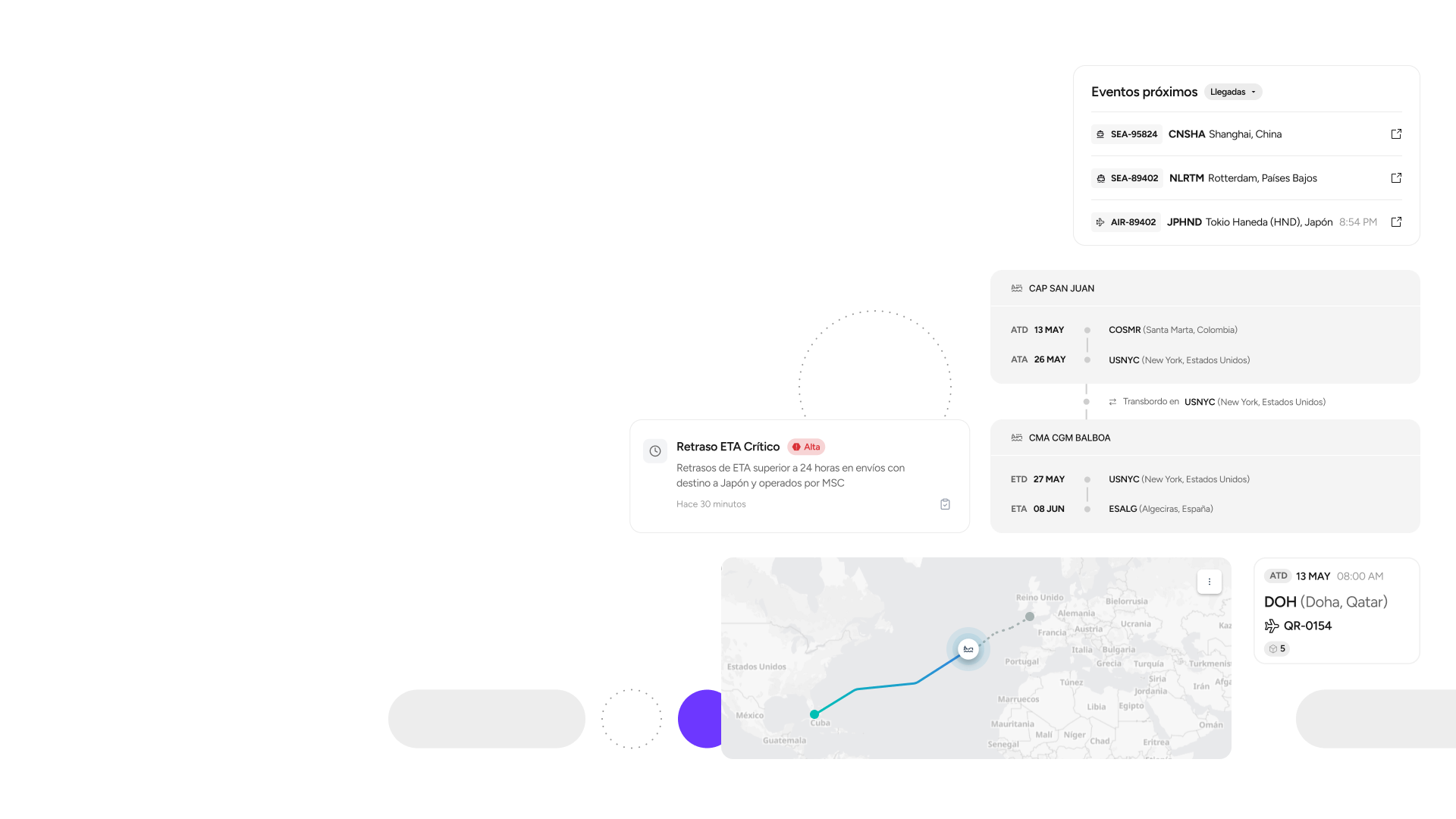
2. Tracking โ€” Structured Complexity

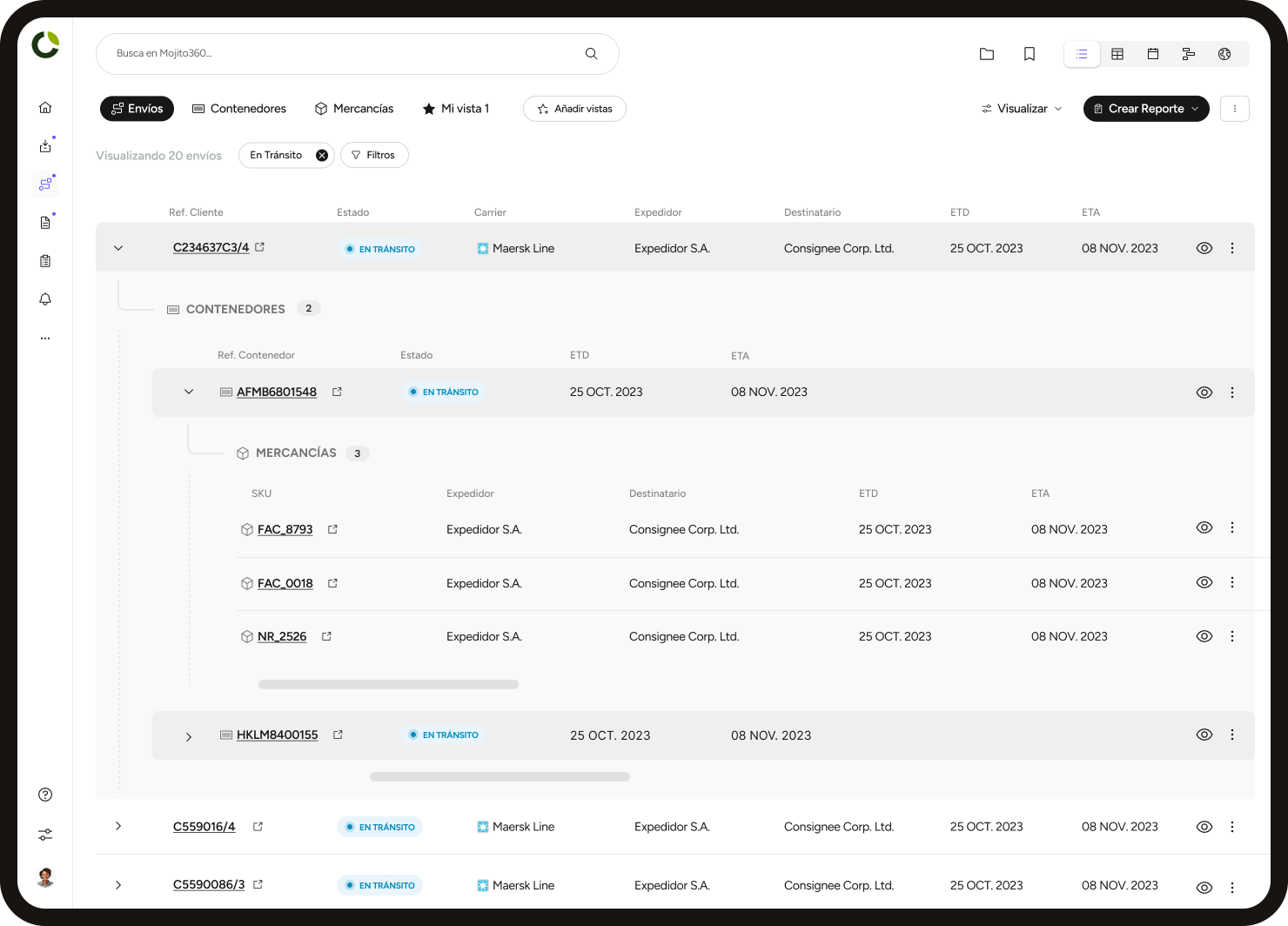
Tracking module serves as the operational backbone of the platform โ€” a single source of truth for shipment management at scale โ€” where large volumes of data are structured into a layered control model, allowing users to filter, customize views, and switch between structured formats to adapt the system to their operational needs.

Information unfolds progressively โ€” from shipment to container to cargo to SKU โ€” enabling both high-level oversight and granular queries within the same environment.

The detail view consolidates route evolution, milestone estimations, transport data, documentation, and IoT monitoring into a coherent decision layer.

Mojito360 Tracking Module โ€” Single source of truth for shipment management

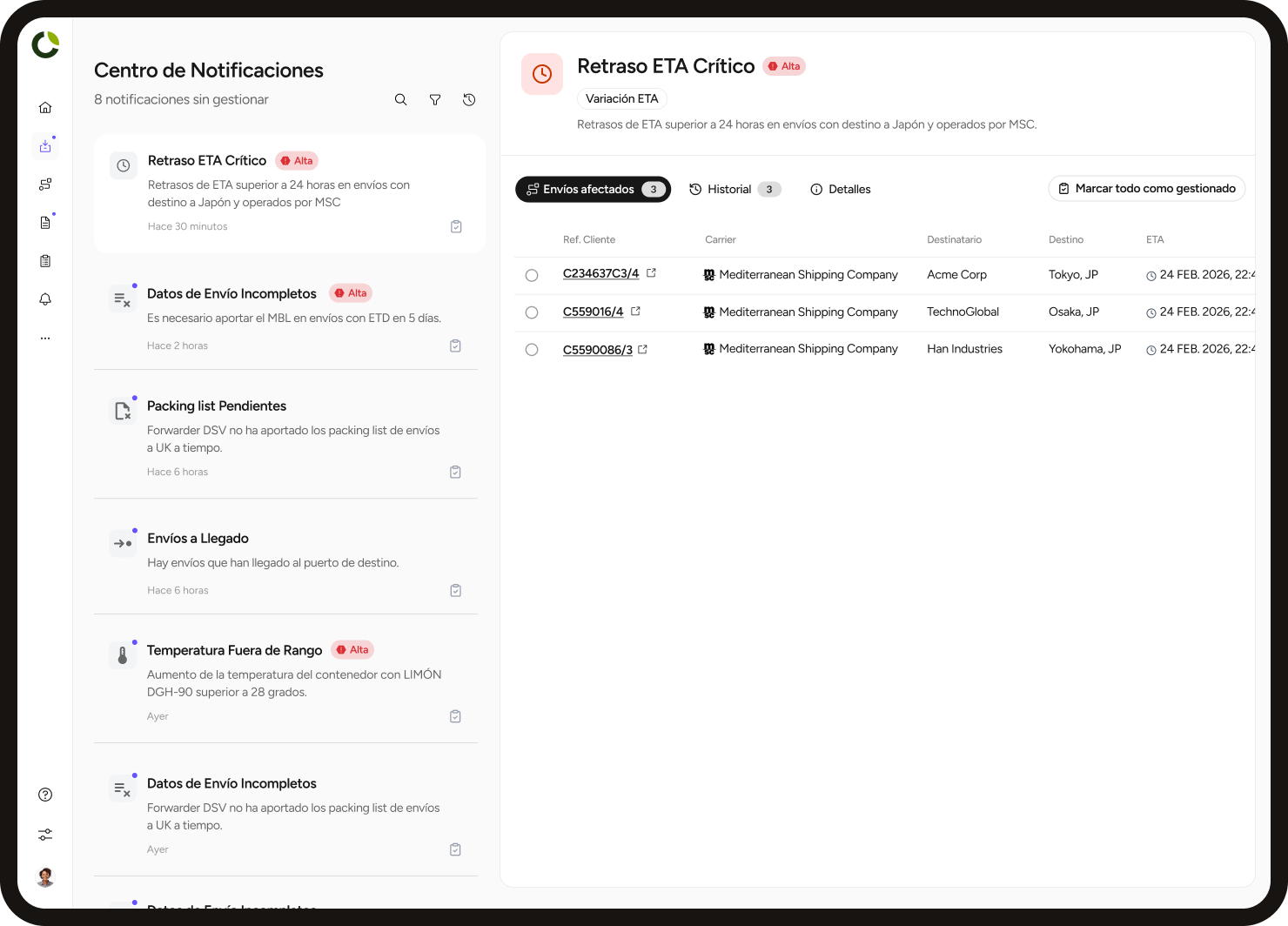
3. Alerts โ€” Signal and response flows

Alerts are not only to notify about changes, but to define the response flows each operational event activates.

Every alert โ€” a delay, milestone change, missing document, or new upload โ€” triggers a structured interaction path that clarifies what changed, who needs to act, why it matters and what happens next.

Alerts function as coordinated response mechanisms, aligning operators and stakeholders through shared visibility and a centralized Inbox that consolidates these flows into an organized decision queue, transforming scattered operational signals into manageable, prioritized actions.

Mojito360 Alerts Module - Signal and response flows

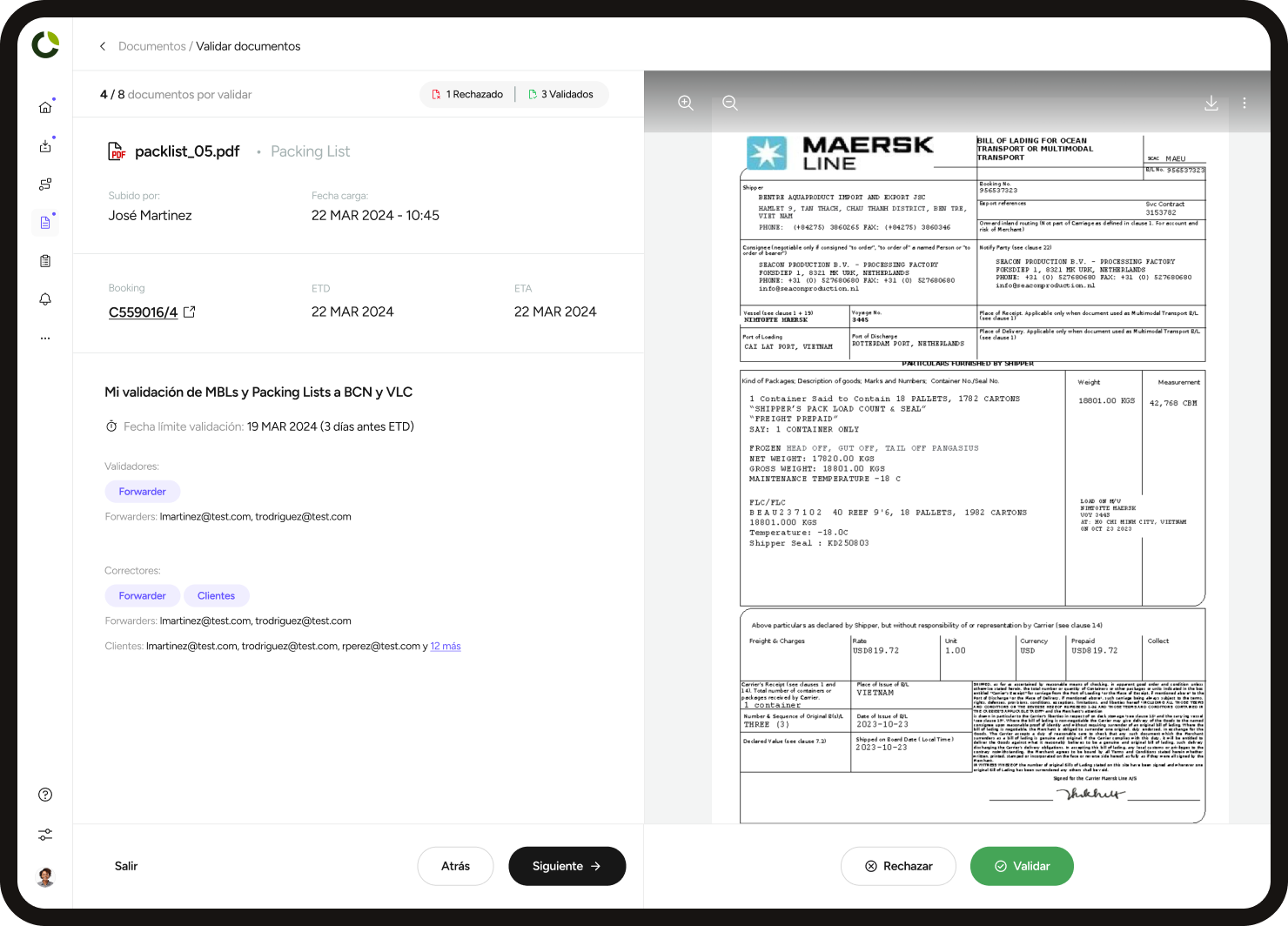
4. Document Management โ€” From files to flow

Designing documentation features meant designing with an operational system in mind โ€” not only a document repository.

The UX work focused on defining data extraction flows from critical documents, validation processes to ensure completeness, and structured document groups based on shipment type and regulatory context. Upload, status, and visualization were embedded directly within the shipment lifecycle.

Documentation was structured as an active workflow layer โ€” reducing manual input, preventing errors, and enabling operational continuity.

Mojito360 Documents Module - From files to flow

Design Mindset

I approached the product with a strong Job-Oriented Thinking. "Does this reduce friction in completing the userโ€™s job?".

Instead of designing around features, I designed around operational intents:

Users just want to..
โ€œTrack my shipments without losing context.โ€ โ€œKnow what needs attention right now.โ€ โ€œCollaborate without chasing information.โ€ โ€œMove projects forward without friction.โ€

This meant simplifying state transitions, reducing dependency on manual coordination, and structuring information hierarchies around decision-making, not system logic.

Three core principles guided every design decision:

Principle 1

Flexibility

Logistics operations differ across industries, shipment types, and regulatory contexts. The system supports diverse workflows through modular structures.

Principle 2

Clarity

In complex environments, visibility equals control. Information is structured around decision-making, making status and next steps immediately understandable.

Principle 3

Actionability

Information alone does not create value โ€” progress does. Interfaces surface priorities and support forward movement across the shipment lifecycle.

Cross-Functional collaboration

The product evolved in close collaboration with multiple teams. My role acted as a bridge between strategic decisions and operational reality.

Product Designer
Commercial Team

Align product value with client expectations and sales positioning.

Implementation Team

Ensure real client workflows were reflected in the system.

Customer Experience

Understand recurring operational friction and post-implementation feedback.

Frontend Developer

Validate feasibility, maintain consistency, and ensure scalable execution.

Product Owner

Translate business requirements into structured user flows and define scope.

The Outcome

Mojito360 transformed fragmented logistics processes into a structured operational control system.

The platform centralized shipment visibility, reduced coordination friction, clarified operational state progression, and improved exception management.

The focus on clarity, control, and friction reduction allowed enterprise teams to operate with greater confidence and efficiency.

What Mojito360 represented for me

Designing within constraints

Managing high-stakes enterprise complexity while maintaining operational clarity and focus.

Structuring complexity

Transforming fragmented data and unstable environments into usable, centralized systems.

Operational clarity

Bringing control to volatile logistics environments through structured and actionable information.